Writing
Writing
We have used the EEF model curriculum as well as the DFE writing framework to create a bespoke structure that supports the needs of our pupils. Our units of work are broken down into three sections.
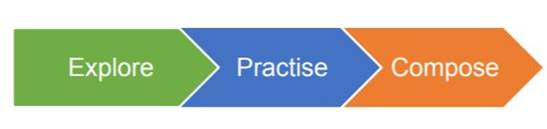
Explore: Children will explore the story, the text type, the characters and the setting. They may learn about the author or further information about context they may not have experienced before (e.g. learning about what evacuation in WWII is before reading ‘Goodnight Mister Tom’). This will also include exploring the features of the text that the children are writing, unpicking the text and looking at different samples of writing.
Practise: Children will then get the chance to practice sentence level work – this will help them to understand the structure and purpose of a sentence to help them better communicate their ideas. Teachers will use objectives (include grammar and literary features) from the year group to help children to learn basic sentence structure and then develop it for the purpose of a text.
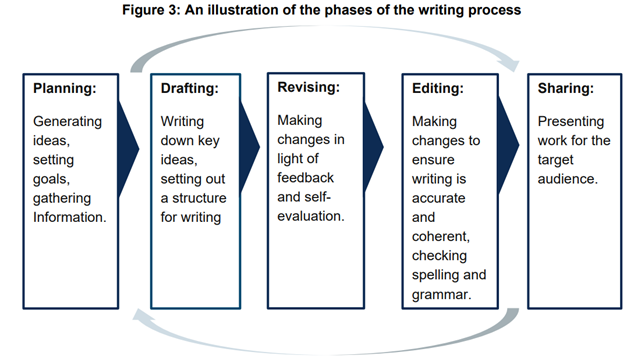
Compose: Children will then have the opportunity to use the skills they learned and developed in the practise phase to write independently. Pupils will use different planning tools to prepare to write while also thinking about the audience, purpose and context of the genre. They are then guided through the independent writing process (as shown below from the DFE Framework) with a focus on revising and editing.
Spelling
Year 2 - 6 pupils are taught spelling 3 times a week as part of the reading lesson using the Read Write Inc spelling programme. It teaches applicable spelling rules and patterns based on the statutory guidance. The structures and routines follow on from the already embedded Read Write Inc phonics programme so children are familiar with the strategies and activities required of them in each lesson. These lessons include a variety of written activities which they complete in their Read Write Inc. Spelling books and are complemented by online videos and resources.
Spelling Bee
As part of our work to promote high standards of spelling throughout the school, we will be introducing the William Byrd Spelling Bee, which will take place over the last week of each half-term. This will be introduced to children in assembly next Friday. We feel that this is a motivating and fun way to celebrate the achievement of our children.
What is it?
The Spelling Bee competition is becoming more popular in the UK and as we celebrate our children’s sporting achievements, we are looking for other ways to acknowledge our children’s successes. Our Spelling Bee will take place from Year 1 to Year 6.
How does it work?
Each year group will be given the list of common exception words recommended for children to read and spell for their age. Common exception words are words in which the English spelling code work in an unusual or uncommon way. They are not words for which phonics 'doesn't work', but they may be exceptions to spelling rules, or words which use a particular combination of letters to represent sound patterns in a rare or unique way.
Children in Year 1 and Year 2 will have a new list each year and children in Year 3 to Year 6 will have one list over two years.
Each class teacher to choose 10 words from the list at random for children to write. Anyone who gets all ten words correctly spelt will move to round two. This is the oral stage where children will be asked to spell aloud 10 random words from their spelling list. Anyone who gets 10/10 will move to the semi-finals.
The Semi-finals is a knockout round. This is continued until there is one person identified to represent their class.
Finals Once a class winner has been found they will challenge their partner class held in the style of knockout resulting in a year group winner. We encourage parents and carers to support the children with practising their words in preparation for the Spelling Bee, which will take place during the last week of each half-term.
If you have any questions please speak to your child’s class teacher.