Behaviour for Learning
Our Expectations of Behaviour
William Byrd Primary School strives to provide an exceptional, safe and inspirational environment where children are able to achieve their full potential in all aspects of their learning underpinned by high expectations for all. We expect our children to be polite and courteous, showing consideration and respect for others.
We will achieve this by creating a learning environment which is stimulating and challenging, inclusive and enjoyable. William Byrd is a wonderfully diverse school and we promote a sense of belonging to our school and local community; encouraging a shared sense of responsibility from everyone for making William Byrd a happy and safe place to learn.
The purpose of our behaviour policy is to:
- Provide an environment in which children feel safe, secure and respected
- Promote good behaviours for learning
- Enable children to develop a sense of self-worth and respect and tolerance for others
- Develop a moral framework in order to promote responsibility and acceptance of all people
- To establish and maintain consistent approaches to behaviour management across the school
- To encourage increasing independence and self-discipline so that each child learns to accept responsibility for their own behaviour
At William Byrd we strongly believe in the power of giving children choices and consequences and allowing children time to make the right choice. Through consistent delivery of appropriate consequences, children are encouraged to make positive choices which benefit their learning. If a child makes a poor choice in class, then staff are expected to follow the Behaviour For Learning Flow Chart (see behaviour policy).
Core Values
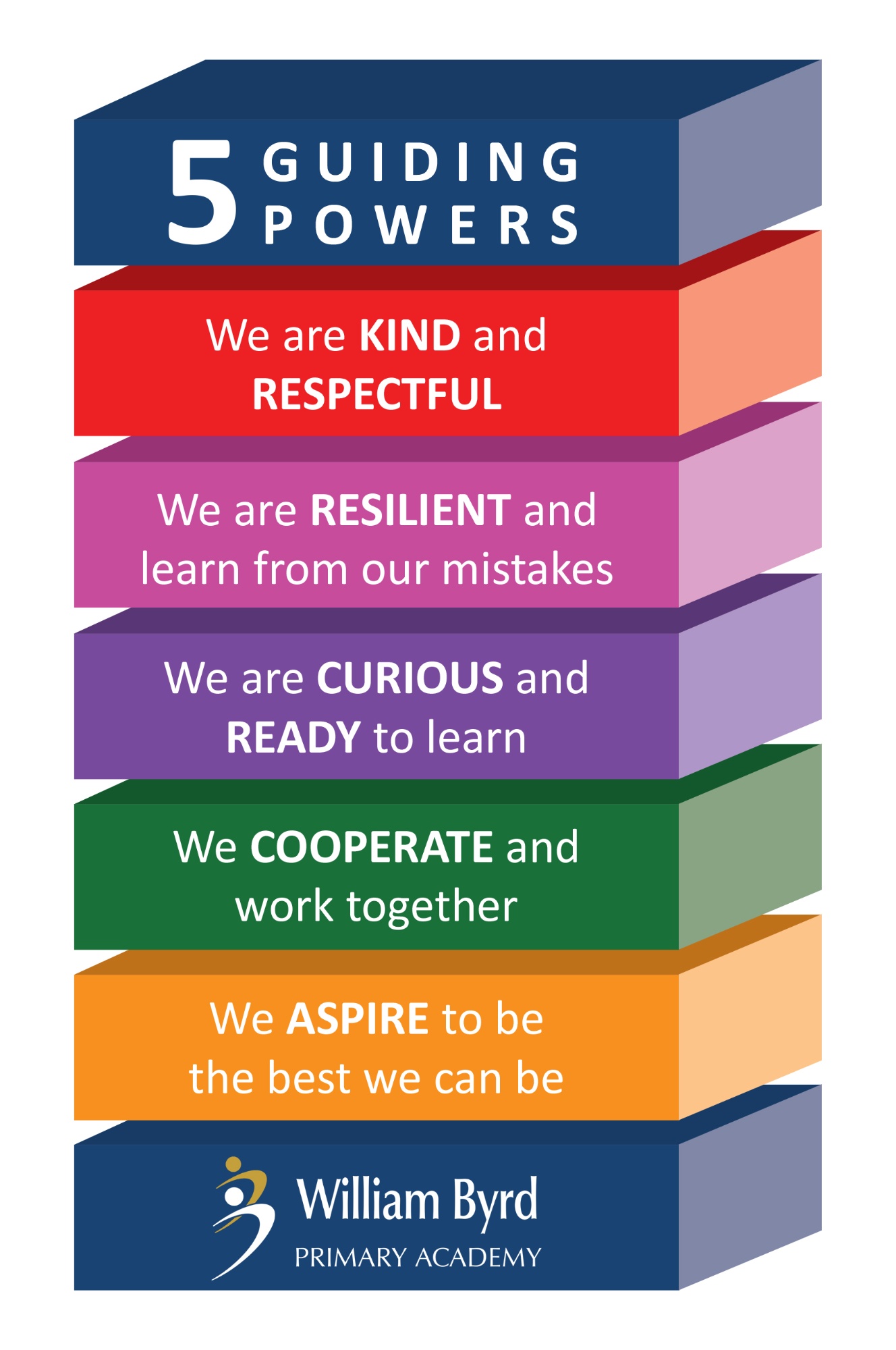 Our Five core values or ‘Guiding Powers’ underpin every aspect of our work at William Byrd and set out our expectations of children’s behaviours for learning:
- We are kind and respectful
- We are curious and ready to learn
- We are resilient and learn from our mistakes
- We cooperate and work together
- We aspire to be the best we can be
Children are expected to demonstrate excellent learning behaviours and take on responsibility for both following our guiding powers and for their own choices. If behaviour does not meet expectations, appropriate and commensurate consequences will be given. William Byrd is an inclusive school and we understand that certain children will need extra support when it comes to behaviour. In these instances, adjustments will be made to ensure that children with SEND feel safe and supported, while we help them to take responsibility for their actions.
William Byrd Primary School has embarked on a Therapeutic Thinking journey and are developing our relational practise, including a new behaviour policy which is being developed by a working party.
Learning and Teaching
There is a very strong relationship between behaviour and learning, children learn better in an ordered and positive environment. Equally, children who are stimulated and engaged in their learning through high quality, effective teaching, and children who have their progress and achievements recognised will feel valued and motivated to achieve more.
In class activities, including PSHRE and circle time, and through smaller group work where appropriate, we teach children:
- Responsible behaviour and that their feelings and reactions can be affected by what is happening within and around individuals
- Relationships with others and that friendships, caring and respect for self and others are important in maintaining positive relationships
- Responsible citizenship, including opportunities to discuss issues and views and influence positive change in the school
Social and Emotional Learning
“Social & emotional learning (SEL) is the process through which children learn to understand and manage emotions, set and achieve positive goals, feel and show empathy for others, establish and maintain positive relationships, and make responsible decisions.”
Weissberg et al, 2015
To support children to develop their social and emotional literacy, we have trained adults in school who can help children understand and manage their emotions to improve behaviour.
For further information, please see our behaviour policy.